
It’s a sad state of affairs that as our dogs get older, medical intervention becomes more likely, but a radiotherapy story is one that very few people feel they can share.
Those who follow Freya & Frankie’s blogsite were introduced to our wonderful friends Digby and Amber; without them and their ‘Mum” Ruth, we would never have found Freya who – unbeknownst to us at the time – turned out to be Amber’s half sister. Devastatingly, through a tragic accident while chasing squirrels, Amber lost her life in December 2023. Digby, now aged 10, was recently diagnosed with a tumour and here Ruth tells her truly personal story.
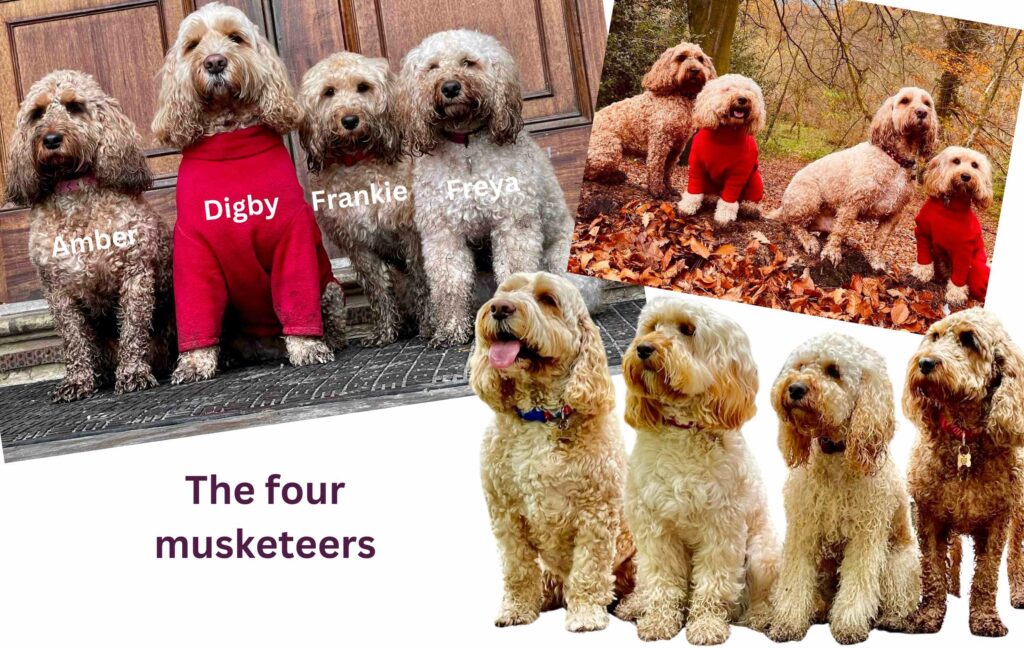
A radiotherapy journey
This is a true story about a dog and his radiotherapy journey. The ‘dog’, to be precise, is Digby my beloved cockerpoo who is so very special. Initially, I wrote this as a form of personal therapy but then realised it might help others who find themselves in a similar position. In the early days, I was unable to find other dog owners who had experienced canine radiotherapy, and I so desperately needed to understand the details to make the right decision. This story does come with a ‘sadness warning’ although I will give a spoiler and say, over two months post treatment, Digby is doing amazingly!
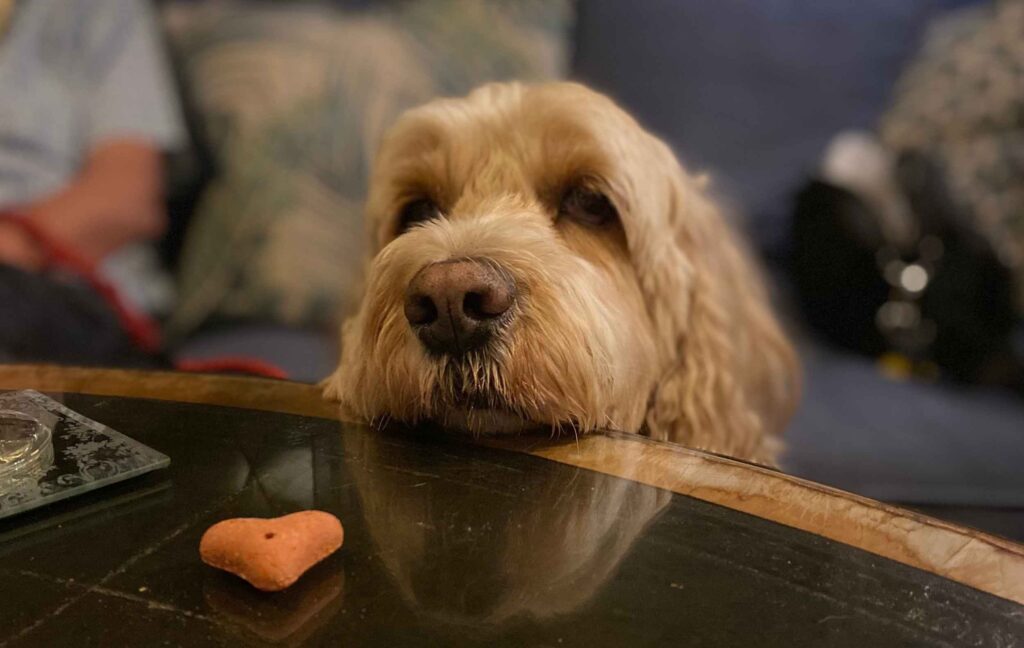
A Labradoodle lookalike
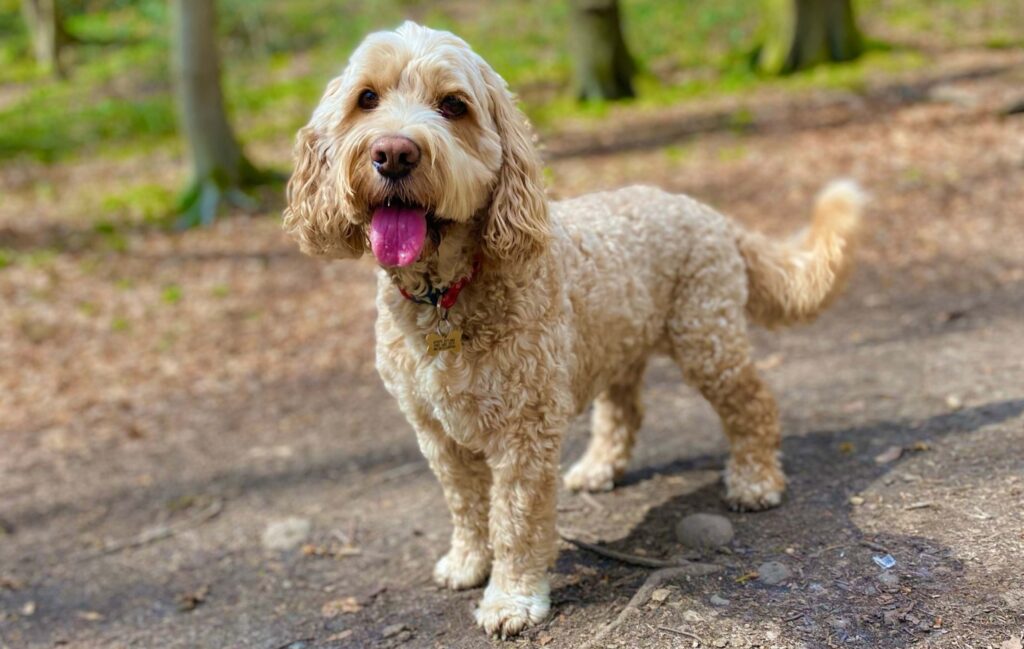
Digby has always been a star in my eyes. A very regal looking cockapoo, definitely on the larger side resembling more of a labradoodle than his medium-sized cockapoo counterparts. He has the most relaxed demeanour, taking life in his stride with a lovely gentlemanly approach. If the ladies need a drink from the water bowl then he waits his turn until they have had their fill. At 10 years old he is definitely in his senior years but being a crossbreed I had high hopes he was going to live to at least 14 years if not older.
The early signs
By the beginning of 2024, Digby had been reverse-sneezing on and off for a few months. For those who haven’t heard or seen this it sounds as if they are trying to take large gasps of air into their lungs which can be distressing to witness. However, I had been reliably informed that it’s not uncommon and many dogs do this. Digby’s episodes often followed the same pattern: once or twice at the beginning of a walk which lasted barely a couple of minutes. With some calming techniques, lifting his nose higher and encouraging him to swallow, the episodes passed & we continued on our way.
In February, I noticed some slight bleeding from his left nostril and was concerned. Off to the vets where I was reassured it was likely to be a grass seed or similar which would pass. We were sent home with an anti-inflammatory medication which worked perfectly – the bleeding stopped and he even stopped having any reverse sneezing episodes for a while too.
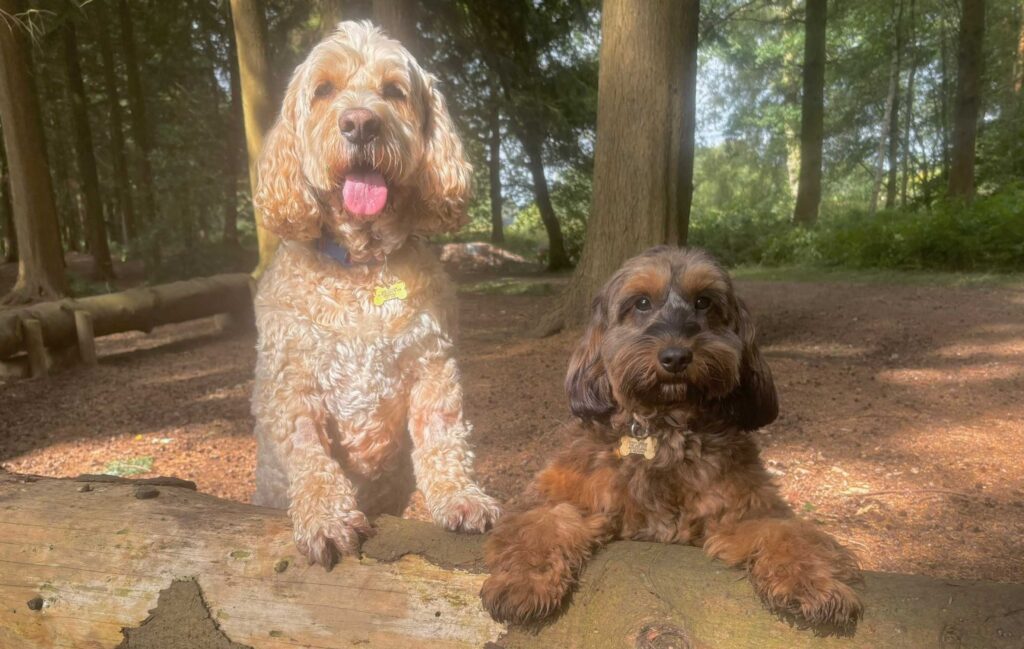
Spring came and we continued to enjoy our lovely dog walks with Digby and our little puppy, Frieda, who was six months old at this stage. The two of them had settled into a relaxed friendship, with Frieda totally idolising Digby, the older and wiser senior figure.
The prolonged sneezing episode
The sneezing episode in June stopped me in my tracks. The dogs had been playing happily in a river when Digby suddenly started to reverse sneeze and couldn’t stop. This went on for at least 30 minutes. I was beside myself as everything I’d tried previously was not helping and Digs was clearly very distressed. We cut the walk short and drove home. Worse was to come as, once home, he started to bleed profusely from his left nostril. I took him straight to my vets who brought the whole situation under control and rapidly stopped the sneezing and bleeding. However, it was apparent something significant was wrong although the vet was keen to stress less severe causes were more likely than a tumour, although this couldn’t be ruled out.
The dreaded scan
A CT scan was planned and even though I was dreading it, I still thought there would be a simple explanation and his symptoms would be resolved with some very expensive medication which I would moan about with my doggy friends later.
I came home whilst Digby was having his procedure and after an agonizing couple of hours waiting for the call, the vet finally rang me with the results. I truly do sympathise with the professionals when they have to give such bad news because there can be no easy way. I was surprised at how calm I sounded as he told me what the scan had shown: a large, destructive, left sided nasal adenocarcinoma. He tried to be positive: they are typically slow growing and rarely metastasize. I jumped to the obvious question: how long has he got? To which the vet said if you do nothing, between three to five months. In that moment, Digby’s and my world was shattered.
Grieving
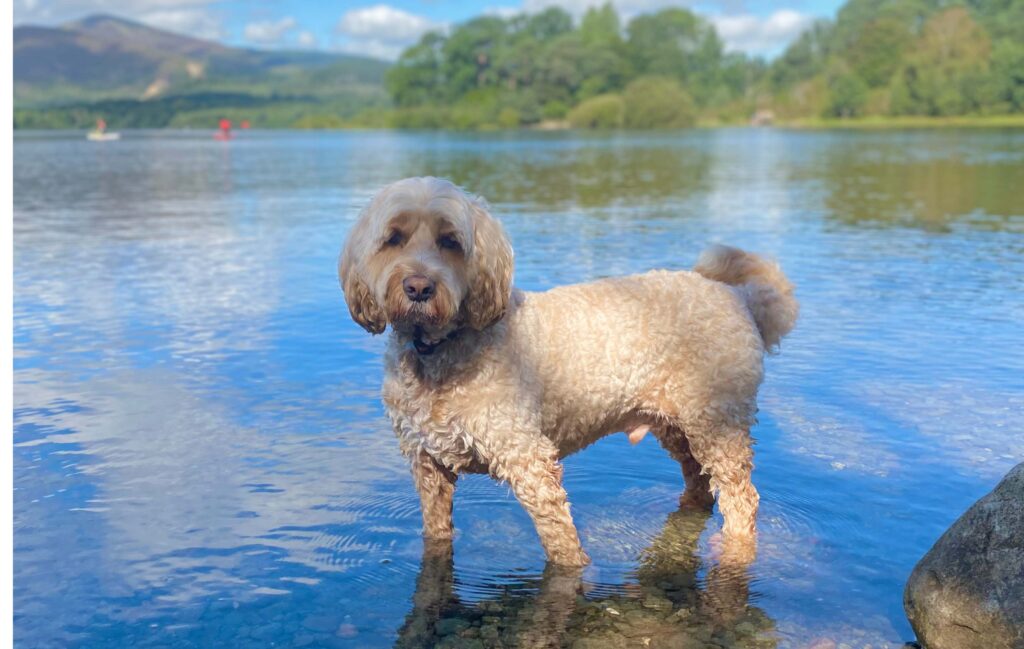
The next couple of weeks was so difficult. I found it so hard to move past the fact I was going to lose him, it was as if I’d already lost him. I cried, I told all my friends, I talked to the vets and anyone who would listen. I knew I wasn’t alone, cancer in dogs is so prevalent, although nasal cancer is relatively rare.
I wrote Digby a bucket list. Okay he didn’t have much say in it but I know the things he loves: trips to the beach for some serious sand rolling, weekend breaks in the Lake District for his favourite water games and all the tastiest steaks and sausages he could stomach. He did start to put on weight but for once I didn’t care.
I researched and bought a lot of holistic canine medicines. I spent a fortune. Fish oil was added to every meal along with fresh organic broccoli and cauliflower – he hated those! I prepared every meal for him by hand (no kibble allowed) with an excess of protein and limited carbohydrates. Did they do any good, who knows, but at least I felt I was doing something.
Time was ticking on and Digby had nearly used up one of his months. In a previous conversation, the vet had said Digby was probably a good candidate for radiotherapy due to his easy-going demeanor, so I decided I needed to know more.
The radiotherapy option
In the North West of the UK, there are very few animal hospitals that offer radiotherapy. The University of Liverpool Small Animal Teaching Hospital based on the Wirral is one that does and even though the distance was not insignificant (over 80 miles round trip from where we live) we needed to make a visit to discuss Digby’s options.
I don’t plan on going into all the detail of what was discussed but needless to say it was extremely thorough. The pros and cons of radiotherapy: he could potentially live for an average of 12 months post treatment but it could be at the cost of loss of fur, radiation sunburn, eye ulcers (in Digby’s case because of where the tumour was), inflammation of the mouth, not eating with significant loss of weight. They clearly explained that the radiotherapy was not a cure and in time the tumour would regrow. In my conversations after Digby’s diagnosis, I’d met a lady whose dog had undergone the same radiotherapy treatment regime (albeit on a different part of the body) and was still happy two years on. I lived in hope.
Digby’s optimum treatment plan was intensive: four weeks of three hospital visits per week meaning 12 sessions in total. Each session would involve an anaesthetic to ensure he would remain perfectly still during the procedure, and it suddenly struck home just how much I was potentially going to put Digby through.
Costs
Obviously, the cost had to be considered here too. Digby was insured but we’d used £3,000 of our annual allowance for his previous tests and scan. That left £4,500 towards any radiotherapy treatment. Even though we didn’t want to think about it, there had to be a limit to how much we would spend so when a figure of £7,000 was stated for the whole plan, I was somewhat relieved. Some figures I’d read online had quoted £12,000.
Decision time
What would we like to do?
It was far from an easy decision. Those who’ve been through something similar will know that sometimes our decisions are based on what we want rather than what is best for our beloved pet, just in the desperate hope we will have them for a little longer. One of the factors in the treatment is the dog’s personality. Bearing in mind, the programme is very intensive and the dog has a cannula in their paw for five days each week, it is easier and kinder if the dog has the personality to take things in their stride. My previous dog was nervous and I would definitely not have put her through any of this. Having said that, we did meet dogs at the hospital having radiotherapy who were anxious and were given drugs in advance to calm them down.
Digby helped me decide. Throughout the whole consultation he had been lying on the floor, initially interested in his surroundings and finally falling asleep. He was so chilled in this alien environment even when he was taken away by the vet to have a further scan to check if the tumour had grown. The vet said he is the perfect candidate if you do decide to go ahead so the decision was made.
The final part of Ruth’s story follows Digby’s radiotherapy treatment and the outcomes.
To be published on 6 December.