
This is the story of Freya and Frankie’s four-legged friend Nellie who we met on a doodle walk several years ago. Nellie is a lively, nine-year-old cockapoo with the happiest of dispositions. Sadly though, in 2023, Nellie was diagnosed with Cushing’s disease, also known as hyperadrenocorticism.

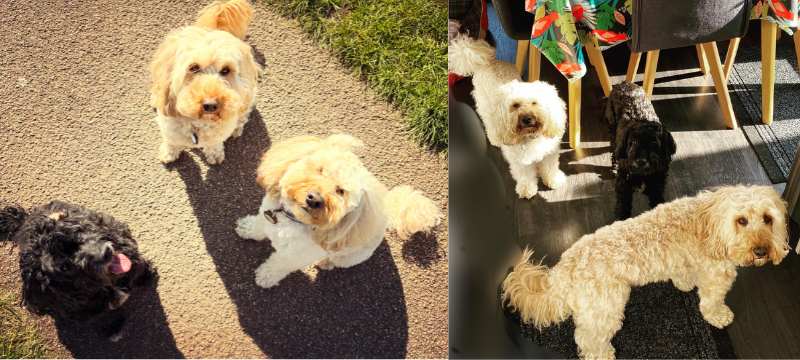
Nellie’s Story
As told by Nellie’s owner, Andy.
“To me Cushing’s was a human disease; I’d never heard of dogs having it but as soon as I mentioned it to other dog owners, it seemed to be relatively common.
Hindsight is a wonderful thing. Once Nellie was diagnosed it was obvious she showed typical symptoms: lethargy, off her food, drinking ridiculous amounts of water and, as a result, peeing constantly. Our primary alert for Nellie was she was peeing in her bed – dogs just don’t do that. Their bed or crate is their place of safety and comfort. Also, we’d fill a bowl of water and within an hour to 90 minutes it was empty and needed to be refilled constantly.”
Trip to the vets for diagnosis
“We took Nellie to our local vet who advised it was possibly a urinary tract infection (UTI), but thought it was too much for a UTI, so was either diabetes or Cushing’s disease. Diabetes and Cushing’s are unrelated diseases but with the same symptoms. Comprehensive blood tests were carried out; there was no diabetes, which was positive, but confirmed it was Cushing’s disease which we were told poodles and mixed breeds are more predisposed to; Cushing’s appears in approximately three in every 1,000 dogs.”
The treatment for Cushing’s disease
“Ongoing is medication a daily capsule with a blood test twice a year – a bit like a car service, a minor and major. Minor is a blood test to check the cortisol level in her blood. The major is full blood count, including a liver function test (LFT) as a side effect of the drug can be a change in liver function.
It took less than a week to start treatment. Nellie did have a UTI – one of the symptoms of Cushing’s disease and easily treated by antibiotics. Getting the dosage right when treating the disease is a balancing act. It’s much easier for larger dogs, harder in smaller ones (see below), but Nellie hit the number pretty quickly. Within two days the drinking and peeing had halved and within five, was almost back to normal.
The team at Eden are just brilliant. The care and compassion shown for Nellie (and for us) has been above and beyond explaining in detail exactly what Cushing’s disease entails in dogs, the treatment available and implications for her future health. When you receive news that your ‘best friend’ has a life-long illness, it’s so important to have vets that are supportive.”
The side effects of Cushing’s disease
“The disease drives hunger; Nellie thinks she’s hungry, so we must resist feeding her as it’s a want not a need. She also used to be a very confident dog; now she’s become very clingy. The most noticeable side effects are those relating to her skin which is now really dry, with potential for skin and ear infections. We’re unable to treat with steroids because of the cortisol in her tablets. She loses fur in patches which does grow back in the main, but her coat is now much thinner. We find giving Nellie a salmon oil supplement, along with moisturising skin spray, Ermidra (see below), has worked wonders on restoring the condition of her skin.
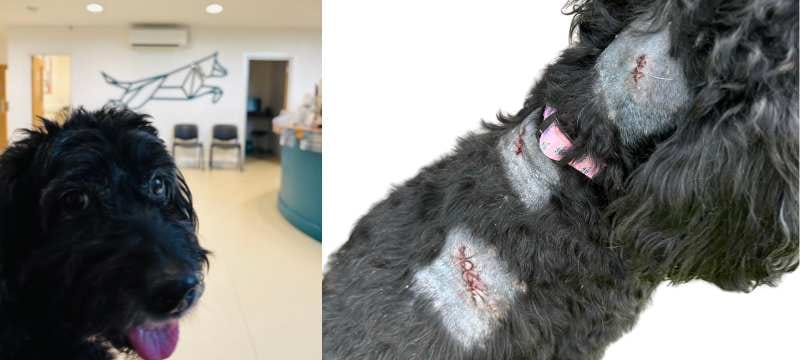
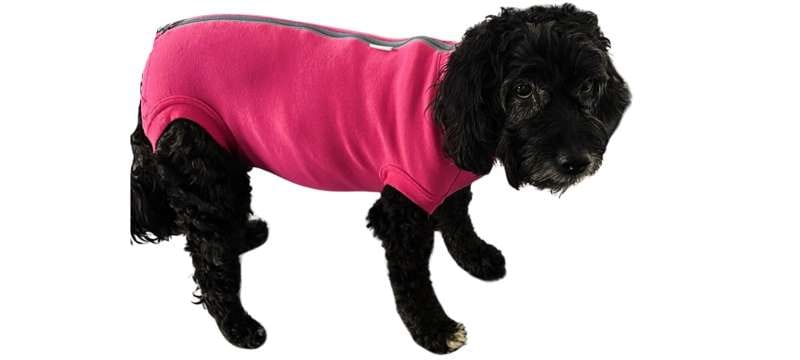
There’s also the cysts and warts. Although the warts don’t give her any trouble, they are unsightly, so we have had some surgically removed on a couple of occasions and wore her surgery recovery vest post op. Nellie has just started to develop a pot belly, another side effect – it’s a good job she’s not vain!”
The cost of treatment for Cushing’s Disease
- Prescription charge for six month’s supply
- Vetoryl 20ml each day. 180 days (6 months) works out at £90 per month
- Ermidra Itchy Skin Relief Spray £15.98
- Blood tests £75 minor/£120 major
How’s Nellie doing?
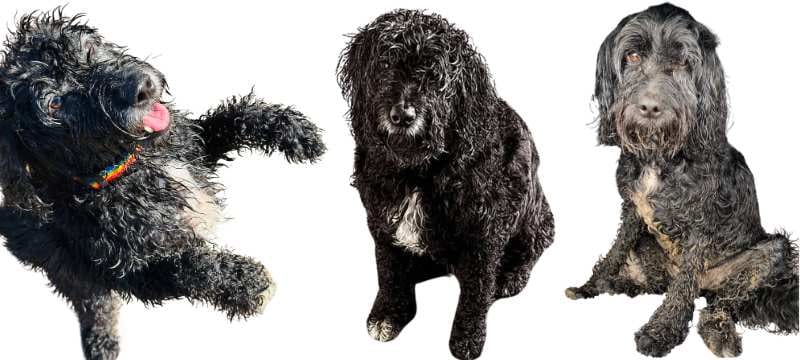
All we can do is make sure Nellie gets her medication. It’s a case of one blood test to the next. We measure the amount of water in her bowl to ensure she’s drinking ‘normal’ amounts. Nellie’s last blood test was just on the limit of high end of normal. Our vet repeated the test six weeks later and second time it had begun to drop to within the bandwidth. The vet advised said this was a guideline – it’s important to also observe the clinical signs. For now, there’s no intervention needed. The longer they can leave it until upping to dose, the better. Long term use of the medication has its implications.
Update: 10 July 2025
It is with a heavy heart that I have to tell you that Nellie took her final journey over the rainbow bridge at 18:50 on Thursday 10th July.
She was recently diagnosed with diabetes, which along with her Cushings disease, and failing liver function, would have led to a complex and invasive treatment process with no guarantee of success.
She was the best of dogs.
She was silly, funny, loving, adventurous, independent, and occasionally stinky. That is how I will always remember her.
My little idiot, my guiding light, my best friend…
My Nellie 🖤 Andy
Cushing’s disease in dogs
Nellie’s local independent veterinary surgery, Eden Vets, explain more about Cushing’s disease in dogs.
“Cushing’s disease is a condition caused by long term exposure to high concentrations of cortisol (stress hormone) which is normally produced in the adrenal glands (two small glands located in the abdomen, near the kidneys). There are two most common causes of Cushing’s disease:
- Pituitary-dependent hyperadrenocorticism – 85% of cases are caused by a benign growth in the pituitary gland located at the base of the brain. This causes the pituitary gland to produce a larger than usual amount of a hormone which stimulates the adrenal glands to produce excessive cortisol.
- Adrenal-dependent hyperadrenocorticism – 15% of cases are caused by a tumour in one of the adrenal glands which produces excess cortisol.
Symptoms include:
- Excessive drinking and urination
- Increased appetite
- Excessive panting
- Thin skin on the abdomen
- Thinning of the fur, recurrent skin infection
- Weakness and muscle loss
- Lethargy
- Distended abdomen with a pot-bellied appearance
The most common medication used is an oral capsule/tablet given one or twice daily. This reduces the production of excessive amounts of cortisol. Regular blood tests to measure the amounts of cortisol produced are very important, as this medication can have powerful effects and can lead to over suppression. Too much medication can cause vomiting, diarrhoea, a lack of appetite and weakness. Dogs treated for Cushing’s disease usually enjoy a good quality of life and medication can significantly improve symptoms.”
Further information
If you suspect your dog may have Cushing’s disease naturally a visit to the vet is the answer. If you’d just like to read more canine-cushings.co.uk has more comprehensive information.